Powering Data Centers with Natural Gas
Separating fact from hype....

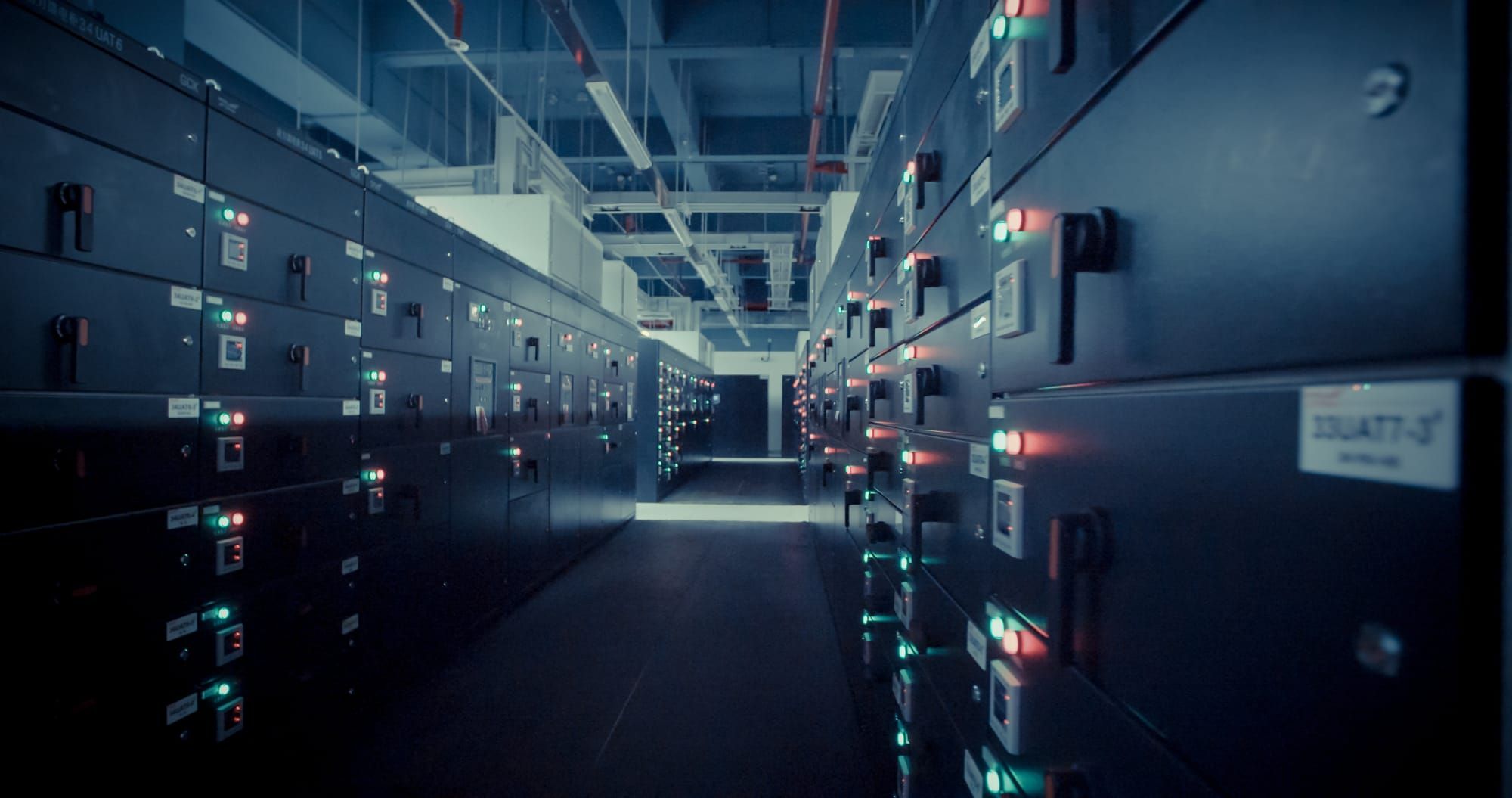
There was a time, not that long ago, when data centres appeared to be on the decline.
In the late 1980s, I worked for a company that built a state-of-the-art data centre, complete with raised flooring, redundant power and communications, backup power generators, and security. At the time I was responsible for the group that did remote control of the company's pipeline facilities and we moved into the data centre because it had so much unused space. Several large mainframe computers from IBM and Amdahl were housed in the data centre as well as the smaller mini computers that our control system used. At the time, the prevailing view of the computer industry was that mainframe computers would be replaced by smaller mini computers networked together, spread around the company offices, and that the data centre wasn’t going to be needed.
Turns out that prediction was wrong.
Mini computers were soon re-configured into smaller servers that could be housed in an office closet. It turned out to be less expensive and more reliable to keep these servers together in … a data centre. This, of course, is now referred to as cloud computing, which is just a large data centre where servers are kept on either a leased or owned basis. Data centres are still around and continue on a steady growth path.
AI growth has driven data centres back into the news as AI companies have been building more of them to keep up with the growing AI demand. We decided to have a look at the growth trend to try to separate fact from hype. Since much of the power being discussed is from natural-gas fired generators, we wanted to understand what this means for the climate.
(Note: we could discuss a lot of topics like water and noise related to data centres but in this article we are going to focus narrowly on natural-gas power generation.)
What has been built and announced
Between 2006 and 2023, an average of 8.6 GW (gigawatts) of natural-gas generating capacity was added yearly, with a peak of 19.3 GW in 2018. But after some changes in the industry (which are outside the scope of this discussion), in 2024 there were 2.1 GW and in 2025 4.6 GW.
A typical gas generator takes between three and five years to bring online, depending partly on what type of plant is being built.1
Natural gas generators are dominated by two "aero derivative" types (think of a jet engine on an airplane): simple cycle and co-generation cycles. A simple cycle plant is usually a gas turbine connected to a generator. A co-gen natural gas plant adds a heat recovery unit that uses the waste heat from the jet engine to spin another turbine and make more power. Co-generation installations make up 73% of gas generation capacity, added since 2006.
Additional natural gas capacity of 63 GW is forecast2 to be added to the grid between 2026 and 2031, or an average 10.5 GW a year if it was all built. The breakdown of this forecast is:
- 17.9 GW is under construction
- 9.4 GW has regulatory approval but not started
- 35.8 GW announced only
Just a reminder that the total inventory of power additions to the electrical grid planned for 2026 break down as 2:
- Solar: 43.4 GW
- Battery: 24 GW
- Wind: 11.8 GW
- Gas: 6.3 GW
- Total: 86 GW
The largest AI developers, sometimes called hyperscalers, prioritize speed of installation above all other requirements. All the infrastructure required to build a data centre needs time, but building out the power supply is among the most problematic. Typically, the permitting, regulatory processing, and hearings can take years for most new power installations. Permitting and regulatory hearings are an important part of ensuring large new loads don’t negatively impact existing customers on the grid. In order to move quickly, the industry is pivoting to wherever and whatever energy sources can be brought online quickest.
Data centre demand curves need to be considered as part of the power-build decision. AI data centres have high load factors: that is, they need to be up and running most of the day and night. Normal residential loads have a peak in the morning when people get up and another at night when they return home, with lower demand during the day and even lower at night. This enables grid designers to incorporate different kinds of generators into a grid to meet this variable load. Expensive “peaking” generation, like simple cycle gas generators, can be used to cover morning and evening loads while lower cost and intermittent sources can cover most of the rest of the day.
AI data centres fall into two general categories, driving different decisions for the grid designers:
- Training-oriented data centres run intense and continuous computing loads that require uninterrupted power, sophisticated liquid cooling, and use the massive highly-dense computer configurations needed for training. Since they run independently while training, they can be built in remote areas.
- Inference-oriented data centres interact nearly continuously with individual and corporate AI users. This is the sort of AI that people and companies interact with ... and it has different characteristics. Generally, inference-oriented data centres call for higher availability and reliability, low latency communications, and close proximity to populations of users.
Today the divide between AI data centre types is about 50/50. Inference load is projected to grow a bit faster, reaching 60% by 2030.3
In an effort to meet industry timing requirements and get around traditional development time requirements, some energy providers are focusing on building standalone power facilities that don’t connect to the existing power grid. These are referred to as “behind the meter”. Since they are not connecting to the grid, their existence shouldn’t either directly help or hurt the current customers on the grid. Locating power on, or adjacent to, a data centre and keeping it separate from the existing electrical grid can theoretically get around some, but not all, regulatory hurdles.
Historically, the fastest way to bring on new incremental power has been by using gas-powered generators, at least when compared to other traditional power generation like coal, oil, and nuclear. A gas turbine can be mounted on the back of a truck and literally driven to the site, connected, and can be generating power in days. Installations like this are extremely expensive to create and to operate and are appropriate for emergency or temporary uses; data centres are neither.
Power developers are finding gas-fired generators are increasingly difficult to deploy for data centres and are becoming increasingly problematic. Firstly, to use a gas-turbine powered generator there needs to be gas. This usually means a location near a source or a pipeline that can be readily accessed, so site selection becomes a factor. Rising demand for gas turbines has driven longer lead times to source a generator, with delivery times now running about 5 years for large units.4 This pushes developers to deploy used or repurposed units or to use reciprocating engines. Most recently, they have considered using gas to heat a boiler to turn a steam turbine, which drives the power generator.
This focus on bringing on more power more quickly means that scant attention is being given to the greenhouse gas impacts of these installations. As we know from previous research on this topic, the impact of fugitive methane emissions is 80x as damaging as the CO2 emissions that are emitted by gas-fired power generators. Existing US Federal government agencies have reduced emission regulation, oversight, and reporting to the point where the current emissions level from natural-gas generators is largely unknown or under-reported. With the drive to speed above all else for new installations, it is fair to assume the emissions of greenhouse gases per installation will exceed historic norms.
Our conclusion is that these concerns and bottlenecks mean that data centre development is unlikely to drive a spike in gas fired power generation in the next few years.
Remember though, we have been wrong about predicting the future of data centres before….
Reading
- “Annual Electric Power Industry Report, Form EIA-860 Detailed Data with Previous Form Data (EIA-860A/860B) - U.S. Energy Information Administration (EIA).” Accessed October 27, 2026. https://www.eia.gov/electricity/data/eia860/.
- “New U.S. Electric Generating Capacity Expected to Reach a Record High in 2026 - U.S. Energy Information Administration (EIA).” Accessed October 27, 2026. https://www.eia.gov/todayinenergy/detail.php?id=67205
- “The next Big Shifts in AI Workloads and Hyperscaler Strategies | McKinsey.” Accessed October 24, 2026. https://www.mckinsey.com/industries/technology-media-and-telecommunications/our-insights/the-next-big-shifts-in-ai-workloads-and-hyperscaler-strategies.
- “Natural Gas Equipment Bottleneck Is Easing: Jefferies | Utility Dive.” Accessed October 27, 2026. https://www.utilitydive.com/news/natural-gas-equipment-generation-bottleneck-data-centers/812931/.
1 This is for all uses including AI