Norway Protects Arctic Andfjorden Marine Area
Norway adds its largest marine protected area yet.

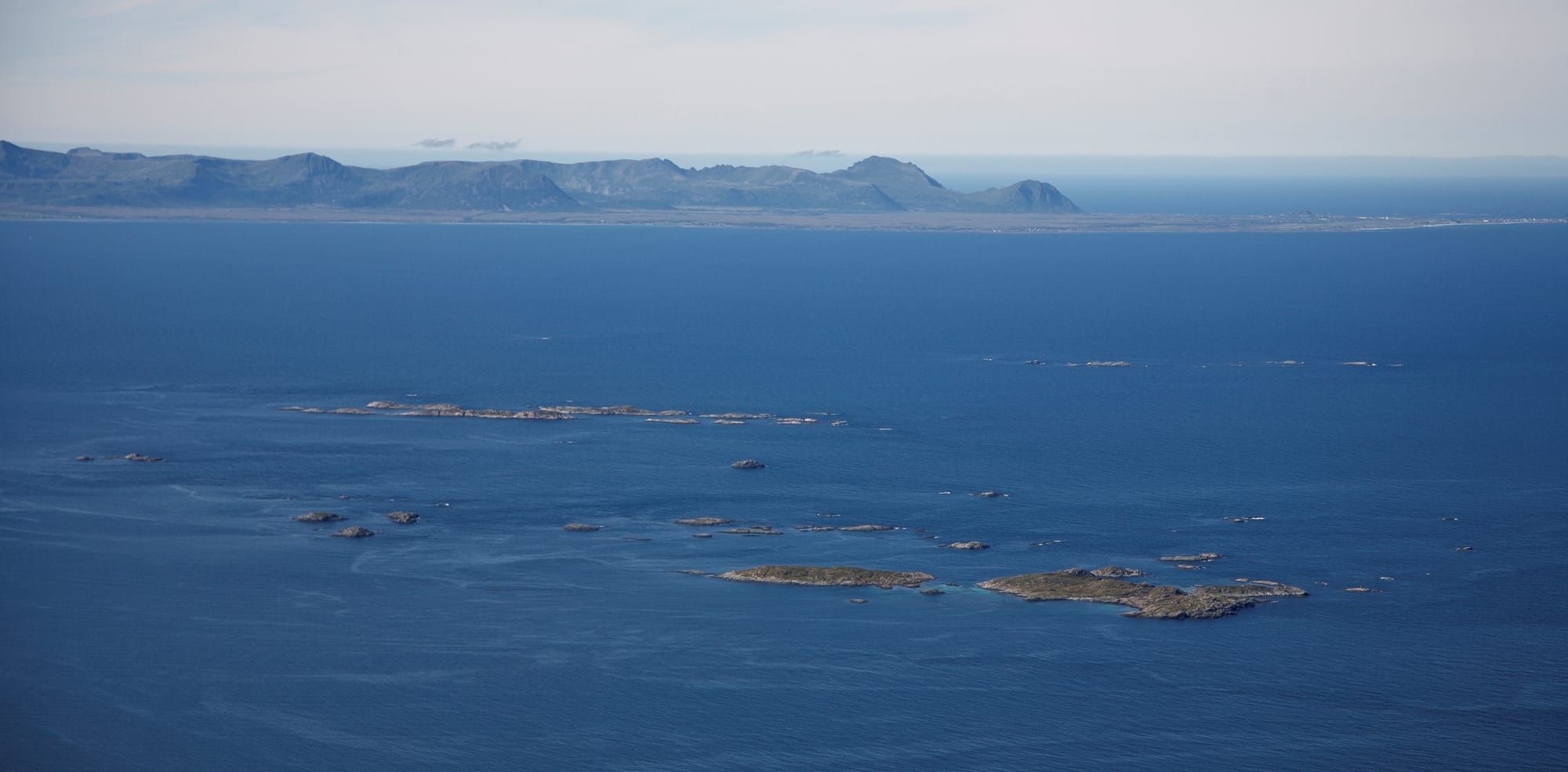
Marine Protected Areas (MPAs) are an important part of a survival strategy for the planetary biosphere.
These preserves are intended to establish a distance between marine species and humans and to protect marine life from commercial activities. They act as change buffers and help restore depleted species. When they succeed, they spill over their borders to maintain diversity and increase—and restore—wild populations at large.
Norway takes its Marine Protected Areas seriously. In September 2026, it established Andfjorden, the 24th of 36 planned Norwegian MPAs.1
Andfjorden is big – just under 2,000 square kilometres. In an unsuccessful attempt to help us envision just how big, the Norwegian government says it is "equivalent to almost 260,000 football pitches."2 But, more meaningfully, this is almost exactly the same size as the island of Maui.
If you want to find it (Andfjorden, not Maui), it's north of the Arctic Circle, not far from Tromsø, adjacent to Anderdalen National Park. This is pretty rugged territory.
As you might expect from looking at the adjacent coastline, the underwater geography is dramatic and varied. The protected area runs from inside some mainland fjords out into the deep ocean. This gives it a varied topography that combines with the cold-water environment to make it unique. The species within it are equally varied, as one might expect, and important candidates for preservation:
- Fields of pandus borealis, a cold-water northern shrimp
- Spawning grounds for cod, Atlantic halibut, lumpfish, and Greenland halibut
- Spawning grounds for the arctic redfish, which is easily overfished because it grows so slowly
- Kelp forests and shell-sand habitats
- Beds of maerl, a hard, branching algae that grows loose and does not attach to rock ... unlike coral, they are photosynthetic plants, not animals
- Vulnerable cold-water reefs and soft and hard coral gardens
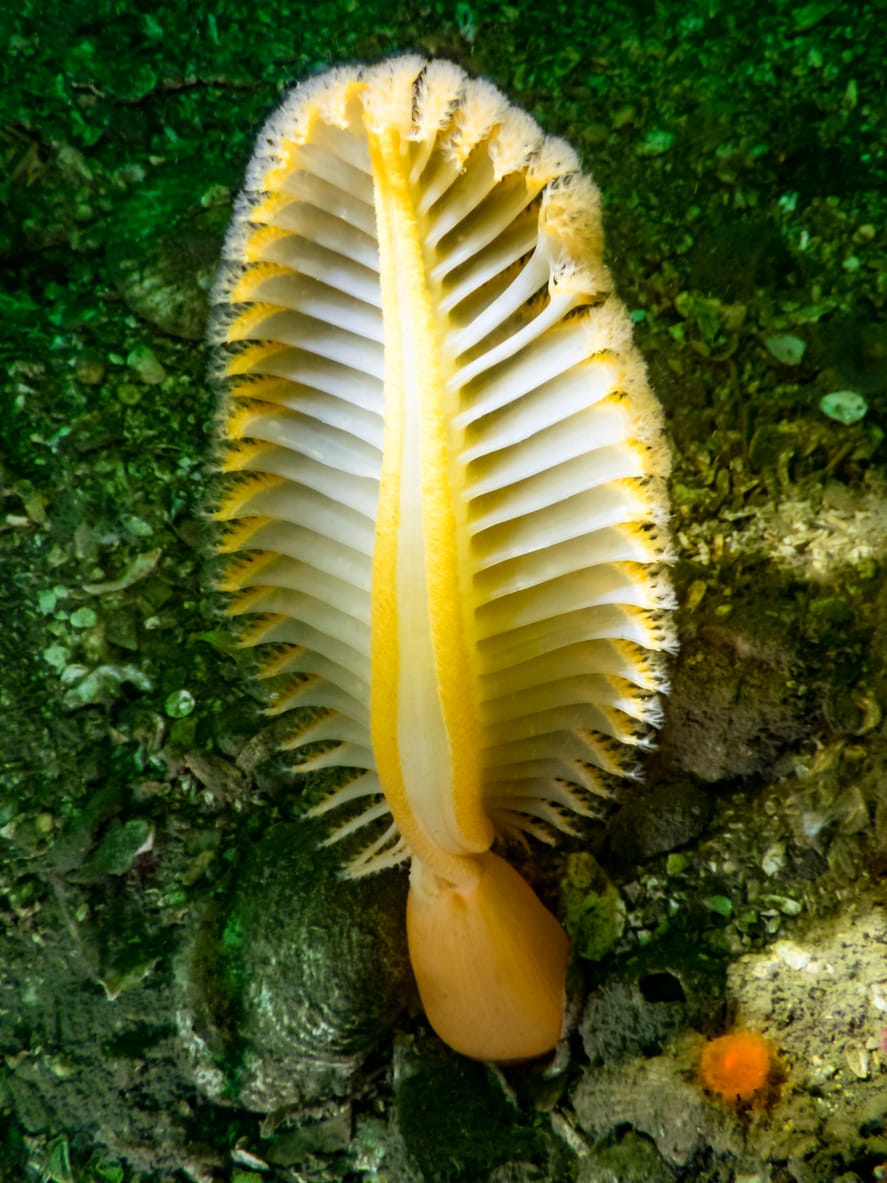
- "Sea pens," a type of colonial coral where soft polyps form in colonies that look like a bird-feather quill pen
- Sponge gardens
Of course, for a marine protected area to work, it has to be actually ... protected. Using data collected since 2002, a recent study in the journal Science used GPS data, marine automatic identification systems, and satellite imagery to monitor coastal MPAs.3 The study discovered that commercial fishing still happens in 47% of them. These marine protected areas are considered "paper parks": designated but not properly managed or integrated, with obviously-inadequate enforcement.
Of course, this is not yet the situation with Andfjorden, which is newly-formed.
While Norway is physically equipped to protect its marine preserves, a 2021 marine-conservation white paper issued by the Norwegian government concluded: “Norway has not adopted a systematic approach to evaluating the effectiveness of conservation measures under legislation for different sectors.”4
Even so, Norway continues to create new Marine Protected Areas, has credible enforcement institutions, and makes public statements of their importance. We hope that Andfjorden will benefit from this.
Reading
- Environment, Ministry of Climate and. “Meld. St. 35 (2023–2024) - Sustainable Use and Conservation of Biodiversity.” Stortingsmelding. Government.No, Regjeringen.no, September 27, 2024. https://www.regjeringen.no/en/documents/meld.-st.-35-20232024/id3054780/.
- Environment, Ministry of Climate and. “Andfjorden Becomes Norway’s Largest Marine Protected Area.” Nyhet. Government.No, Regjeringen.no, September 18, 2026. https://www.regjeringen.no/en/whats-new/andfjorden-blir-noregs-storste-marine-verneomrade/id3173076/.
- Seguin, Raphael, Frédéric Le Manach, Rodolphe Devillers, Laure Velez, and David Mouillot. 2025. “Global Patterns and Drivers of Untracked Industrial Fishing in Coastal Marine Protected Areas.” Science 389 (6758): 396–401. https://doi.org/10.1126/science.ado9468.
- Environment, Ministry of Climate and. “Meld. St. 35 (2023–2024) - Sustainable Use and Conservation of Biodiversity.” Stortingsmelding. Government.No, Regjeringen.no, September 27, 2024. https://www.regjeringen.no/en/documents/meld.-st.-35-20232024/id3054780/.