Scared Green?
Can a close encounter with an extreme weather event motivate you to take more climate change action?
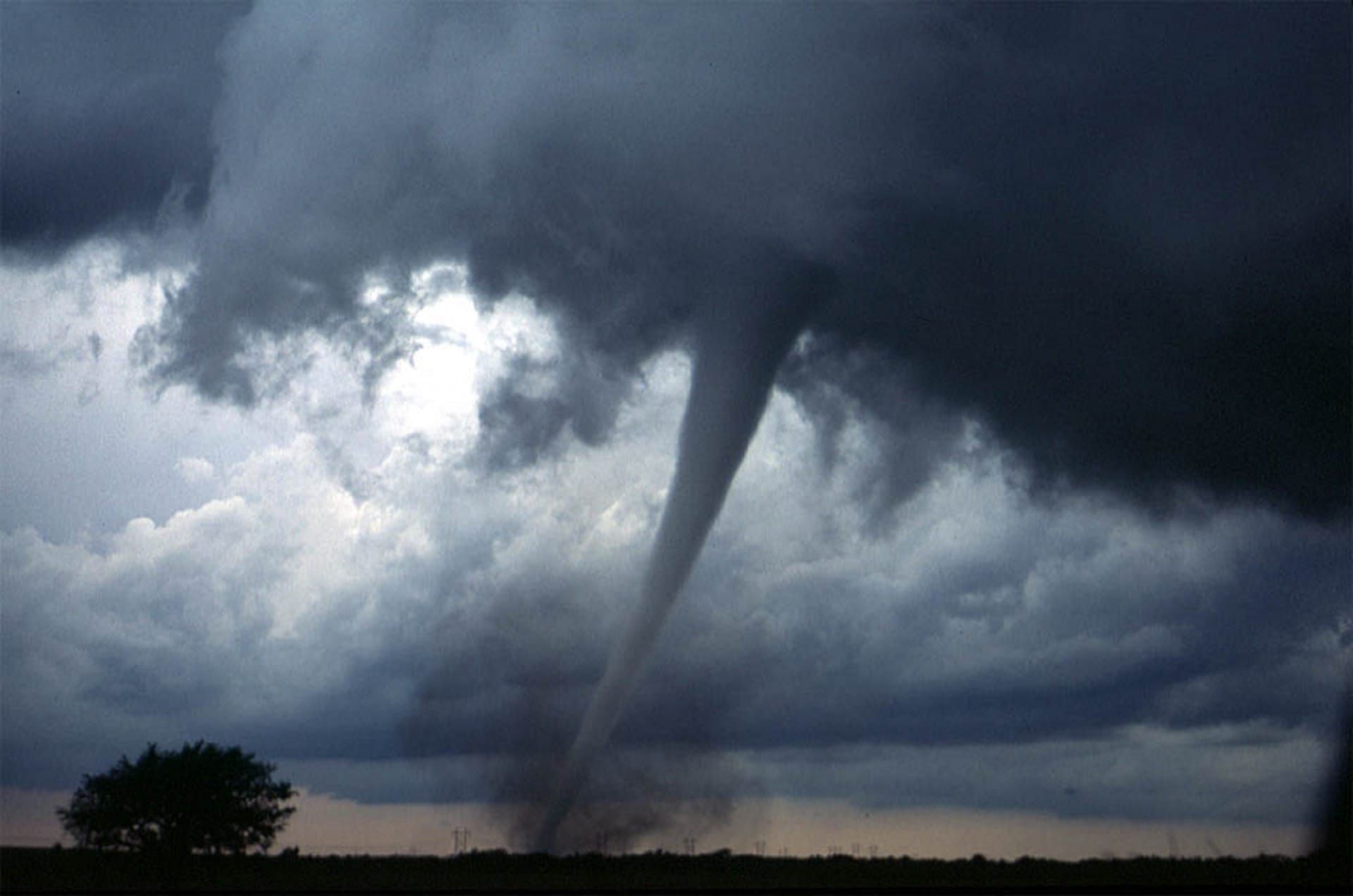
Many years ago, I watched from the back deck on our house as a huge, slow-moving, and powerful category F4 tornado passed by our neighbourhood on the edge of the city, missing our house by about 100 metres. That tornado went on to kill 27 people. My knowledge of tornadoes prior to that (not counting the Wizard of Oz movie) was limited to watching television clips of much smaller twisters touching down in far-off places. Seeing that huge tornado directly that day, and seeing first-hand the awful death and destruction left behind drove home to me — in a visceral way — the power and devastation inherent in extreme storms. Since then I’ve had much more respect for warnings of major weather events and have become more prepared.
Reflecting afterwards on that harrowing experience, I realized there must be a difference between knowing something in the abstract and knowing from first-hand experience. Of course, as with most ideas I have that I suspect might be original, others have thought of it before me. In this case, terms for this difference in kinds of knowledge are found in the fields of both psychology and philosophy.
Psychology calls the knowledge gained from direct experience "experiential" knowledge. Knowledge gained through reading or hearing about something is termed "abstract" or "theoretical" knowledge.1
In philosophy, the differences in these knowledge types comprise a whole subset of the discipline of epistemology (the study of the nature, origin, and limits of human knowledge). Philosophers talk about "knowledge by description" or "knowledge by proposition" (abstract) versus "knowledge by acquaintance" (experiential), and they slice and dice variations pretty finely.2
How might this apply to climate change?
More recently, I began wondering whether the abstract-experiential knowledge gap might (at least in part) have something to do with our collective inaction on the causes of climate change. We know climate change is real, as scientific evidence confirms, but mostly we don’t experience its effects firsthand. I wondered whether experiential knowledge of harmful climate change events drives people to behave differently, to take more mitigating action.
Turns out researchers have studied that very question, among related others. In fact, many studies have been done on what motivates people to act, so many that some researchers have done meta-analyses of other studies.
One meta-study published in Nature Climate Change3 provides a helpful summary of studies of the connections between motivations and climate change adaptation behaviours. The Nature meta-study analyzed 106 studies reported in 90 other papers from 23 countries. The study identified thirteen motivational factors and examined the relationships between them and adaptation behaviours. The analysis makes it clear that robustness of the results varies among and between factors studied, having limitations based on sample size, heterogeneity, and the way some questions were asked in some studies. The analysis results categorized the factors from the studies into three groups, based on the statistical significance of the correlations between motivations and actions.
Group one consisted of motivational factors with non-significant and small effects:
- Trust in Specific Implemented Measures — for example levees, hurricane warning systems, firefighting squads
- Trust in Government — trust in government information, trust in capabilities and intentions of the government to address climate-related hazards, and trust in government in general
- Experience — whether or not people directly experienced “natural hazards”
- Knowledge — knowing about climate change and climate-related hazards
- Attachment to Place — the emotional connection that people have to a place
Group two consisted of motivational factors with statistically small to moderate effects:
- Risk Perception — how risky climate change is perceived to be
- Climate Change Belief — belief in the reality of climate change
- Responsibility — how much personal responsibility people think they have for taking action
- Injunctive Norms — the scientific term for whether you think others will approve or disapprove of your actions
Group three consisted of motivational factors with the strongest relationships:
- Self-efficacy — belief in whether you can do something
- Outcome Efficacy — belief in the effectiveness of actions you could take
- Negative Affect — essentially fear, anger, and sadness about climate change
- Descriptive Norms — perceptions of whether other people are engaging in adaptive actions
Regarding my question about whether direct experience of extreme events affects adaptation actions, this study suggests experiential knowledge of harmful climate change impacts does affect people's intentions and actions, but is only one motivation among many, and not a particularly strong one at that. The answer to the corollary question of whether abstract knowledge (simply knowing about climate change causes and hazards) drives actions is that it does not seem to have a large effect.
The strongest motivating factors seem to be emotional (fear, anger, sadness), confidence (can I take effective actions), and social (what is everyone else doing). This study suggests that policy efforts need to consider the emotional aspects of climate change effects, provide many examples of effective actions we can take, and highlight the work that our friends, neighbours, and colleagues are doing.
Back to my original question, notwithstanding the meta-analysis study, which was published in 2019: more recent studies do confirm a positive link between personal experience of extreme weather and the need for climate-change action. As the authors of a 2024 study of heat events in Shanghai put it, “seeing is more than believing because personal experience increases climate action by fostering climate change beliefs and efficacy."4
Given the increase in number and severity of extreme weather events (e.g. heat waves, heavy precipitation, decreased cold spells) in recent years5 it seems probable that in the near future more people will have direct experience of such events than in the past. Will that expanding experience base lead more people to take, and to advocate for, climate action? We can’t know for sure but it seems likely, and so the pressure for action will be given an additional push.
Reading
- Mohammed Looti, Experiential Knowledge: Learning Through Living, E, August 12, 2026, https://encyclopedia.arabpsychology.com/experiential-knowledge/.
- "Knowledge by Acquaintance and Knowledge by Description | Internet Encyclopedia of Philosophy," accessed September 27, 2026, https://iep.utm.edu/knowacq/.
- Anne M. van Valkengoed and Linda Steg, "Meta-Analyses of Factors Motivating Climate Change Adaptation Behaviour," Nature Climate Change 9, no. 2 (2019): 158–63, https://doi.org/10.1038/s41558-018-0371-y.
- Xinni Wei et al., "Seeing Is More than Believing: Personal Experience Increases Climate Action," British Journal of Social Psychology 63, no. 3 (2024): 1410–28, https://doi.org/10.1111/bjso.12731.”
- Giorgia Di Capua and Stefan Rahmstorf, "Extreme Weather in a Changing Climate," Environmental Research Letters 18, no. 10 (2023): 102001, https://doi.org/10.1088/1748-9326/acfb23.