Renewables Growth Will Limit Warming – AI Modelling
AI model predicts greater levels of wind and solar PV renewables in the global supply by 2050, sooner than current policies would predict, enough to limit global warming to 2 degrees.
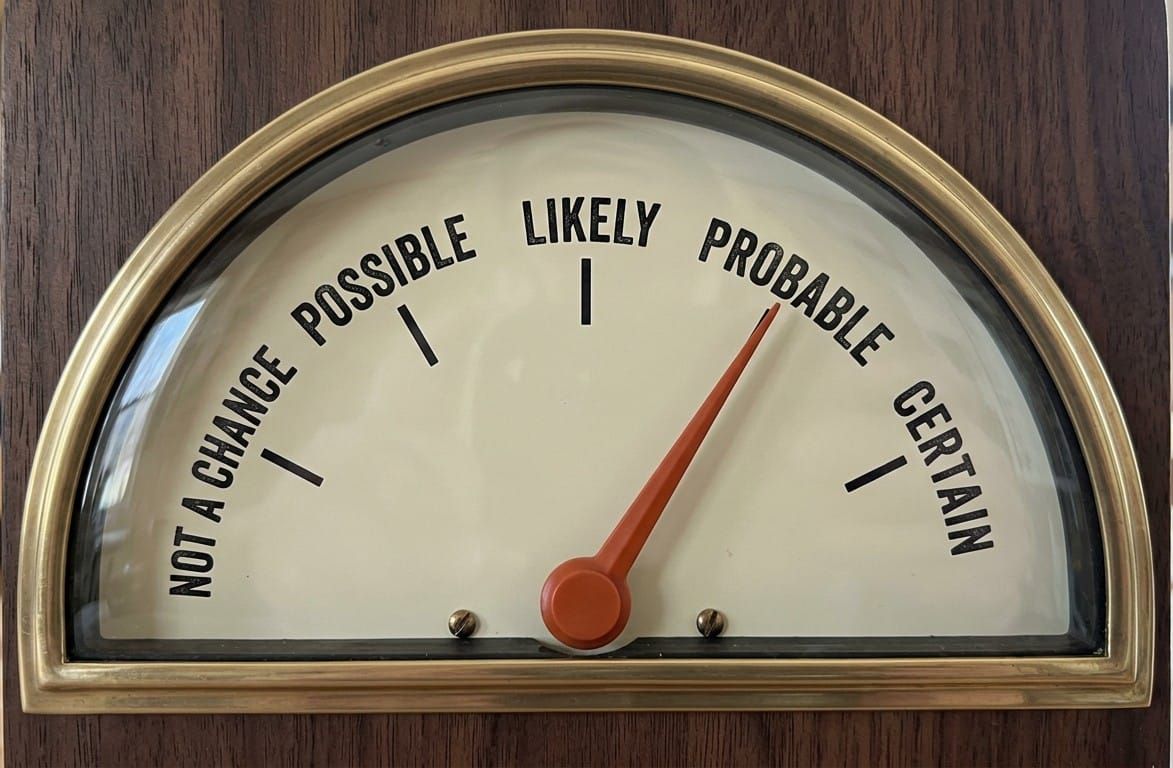
A Danish proverb roughly translates as: “It is difficult to make predictions, especially about the future.”
Despite the proverb, we attempt to predict the future all the time, especially when it applies to carbon emissions from energy generation and resultant global warming.
Two main approaches have been used in the past to try to get a handle on how much carbon we will emit in the future and how much global temperature will rise as a result.
The first approach is used by the IPCC (Intergovernmental Panel on Climate Change). The IPCC generates possible scenarios using Integrated Assessment Models (IAMs). IAMs are effectively built from the ground up to attempt to model causal mechanisms of climate, energy consumption, the economy, and the interactions between them. IAMs have been criticized for several shortcomings. The IPCC itself admits that IAMs don’t model the effects of innovation well.1
The second approach is a statistical one that makes use of an equation known as the logistics function, also known as a population dynamics curve or simply an “S-curve”. The logistics function describes growth rates over time of quantities such as populations, product sales, and adoption rates of technologies. The S-shape of the curve results from three phases of growth: an initial slow phase, an exponential growth phase, and finally a mature slow-growth phase leading to saturation. In the real world, growth is rarely as tidy as the equation would suggest. Policy, cost, and scaling barriers often mean growth is erratic before the technology reaches a take-off point between the first and second phases, and interrupted in the second phase.
Researchers have recently employed a modified logistics-function AI modelling approach to better extrapolate the global adoption of two innovative and disruptive renewable energy types: onshore wind and solar PV.2 The idea behind this approach is to use data on existing adoption rates to fit the curve and make predictions. The data should therefore combine technological, economic, and political factors that affect the growth rate.
The researchers did several things to better fit the curve to the data and use it to make predictions. First, they excluded the initial, pre-take-off phase. Second, they simulated growth for individual countries. Third, because countries adopt renewables at different times, they used early adopters to infer growth for later adopters. Finally, they calibrated the model against five technologies that have already reached near-maturity (mobile phones, for example), and found the model out-performed other forecasting methods.
The AI model was put to work simulating diffusion of onshore wind and solar PV across 13,000 virtual worlds for each technology.
What did they find?
The model's central projection shows global electricity generation in 2050 will be composed of 26% onshore wind and 21% solar PV. These levels of renewable electricity in the global supply are not enough to limit global warming to the 1.5 degrees C pledged in the Paris Agreement, but are enough to limit warming to 2 degrees, which is not what current policies would predict.
The impacts from 2 degrees of warming will be significantly worse than from 1.5 degrees, but 2 degrees is a far cry from the 3 degrees, or worse, that many of us fear.
There is room for hope.
Reading
- Intergovernmental Panel On Climate Change (IPCC), Pathak et al., “Technical Summary.” https://www.cambridge.org/core/product/identifier/9781009157926%23pre3/type/book_part
- Jakhmola et al., “Probabilistic Projections of Global Wind and Solar Power Growth Based on Historical National Experience.” https://www.nature.com/articles/s41560-026-02021-w