Turning Plastic Waste Into Vinegar
One solution to plastic waste might not have any downside.
Nearly 30 years ago, I met biologist Janine Benyus at a conference, where she gave a presentation on biomimicry (aka biomimetics), a new-to-me idea of looking at how nature has evolved solutions to problems faced by organisms, and how we should emulate that approach to design human solutions. Since then, many practical examples have emerged, from shaping the nose of Japanese Shinkansen trains like a Kingfisher’s beak to reduce bow shock, to buildings that cool themselves in a way similar to termite mounds.1
Recently, researchers at the University of Waterloo used a biomimetic approach to develop an elegant solution to the pervasive problem of plastic waste.2
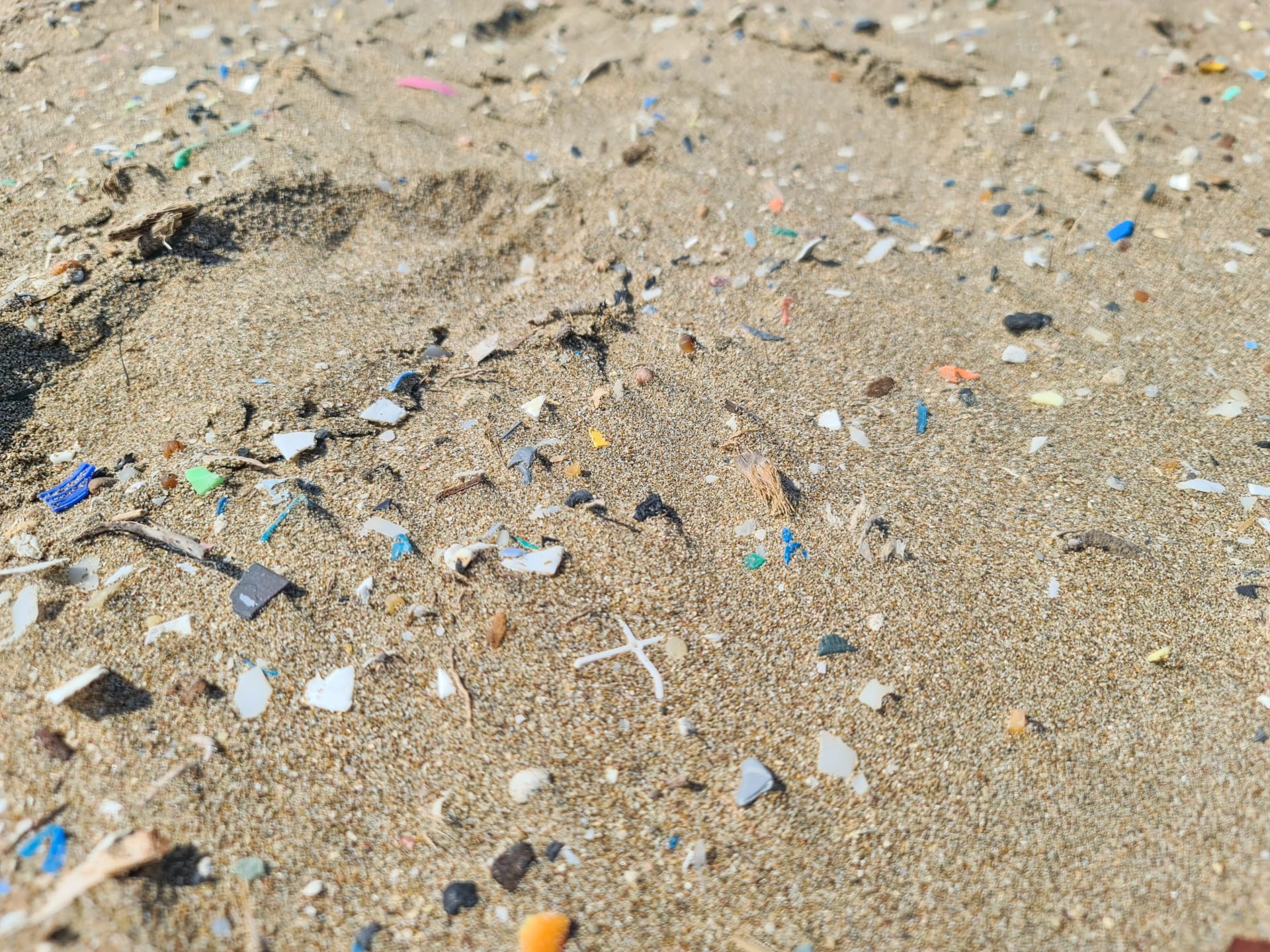
Let’s back up a bit and remind ourselves why plastics in the environment are such a problem. Most plastics are synthetics, made primarily of carbon, hydrogen, and oxygen joined with strong chemical bonds in long chains and in different ways to achieve different properties. Organisms do not easily recognize these synthetic materials, so they don’t readily break them down (plastics don’t rot) – one property we value them for. However, as waste, plastics do fragment into microplastics that enter the food chain at its aquatic base, and on their way up cause “DNA and cellular damage, oxidative stress, alterations in gene expression, and decreased cell viability.”3
The Waterloo researchers were inspired by a type of white-rot fungus that slowly breaks down lignin, a tough, naturally-occurring polymer that binds wood cellulose fibres together. The researchers developed a similar process for plastics using an iron-based catalyst, which, in the presence of sunlight, first produces a chemical that breaks down the plastic to CO2. The same catalyst then turns the CO2 into acetic acid, which is a different chemical arrangement of carbon, hydrogen, and oxygen.
Acetic acid is the active component of vinegar and is commercially valuable, having many uses, including in inks, paints, and coatings, in making textiles, as a solvent, in some cancer treatments, and of course in domestic vinegar.
This bio-inspired process was tested and validated on four common plastic types, PVC, PP, PE, and PET (polyvinyl chloride, polypropylene, polyethylene, and polyethylene teraphthalate), which together account for 60% of global plastic production.4
While this new process has not yet made it out of the lab into commercial use, it seems probable that a process that addresses a major waste problem, uses only sunlight for energy, produces no CO2, and yields a useful product that can generate a revenue stream, will be scaled up and widely adopted.
Reading
- Wikipedia. “Biomimetics.” February 24, 2026. https://en.wikipedia.org/w/index.php?title=Biomimetics&oldid=1340233965.
- “(PDF) Bio‐Inspired Cascade Photocatalysis on Fe Single‐Atom Carbon Nitride Upcycles Plastic Wastes for Effective Acetic Acid Production.” ResearchGate, ahead of print, March 5, 2026. https://doi.org/10.1002/aenm.202505453.
- Karak, Prithviraj, Afsona Parveen, Anindya Modak, Atin Adhikari, and Sankha Chakrabortty. “Microplastic Pollution: A Global Environmental Crisis Impacting Marine Life, Human Health, and Potential Innovative Sustainable Solutions.” International Journal of Environmental Research and Public Health 22, no. 6 (2025): 889. https://doi.org/10.3390/ijerph22060889.
- Houssini, Khaoula, Jinhui Li, and Quanyin Tan. “Complexities of the Global Plastics Supply Chain Revealed in a Trade-Linked Material Flow Analysis.” Communications Earth & Environment 6, no. 1 (2025): 257. https://doi.org/10.1038/s43247-025-02169-5.