Reverse Vending in the EU
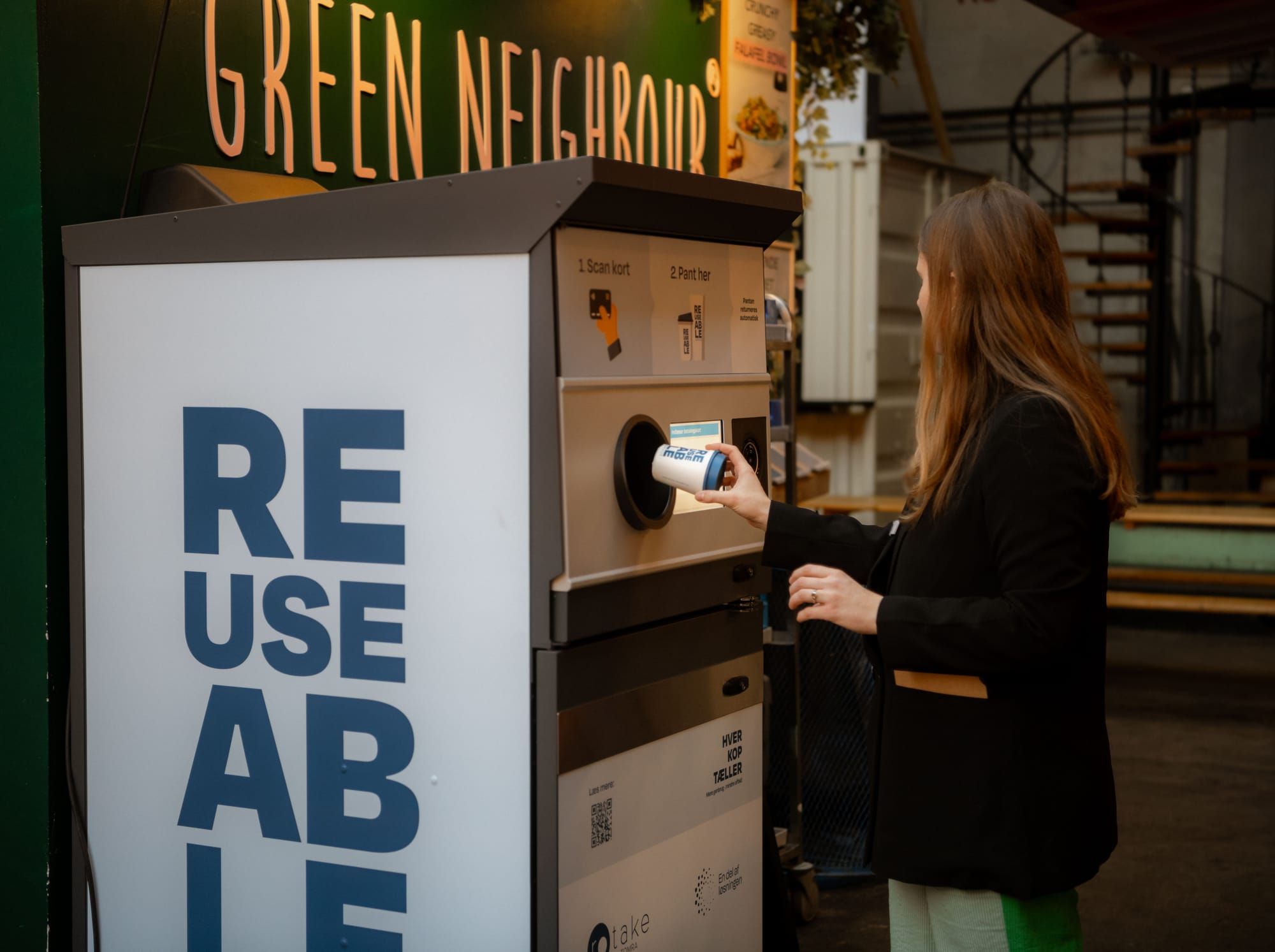
Europe is learning that one solution to the problem of disposable coffee cups and single-use plastics is reverse-vending machines.
Throughout most of our history we modern humans (homo sapiens) didn’t generate much waste. As paleolithic hunter-gatherers we used pretty much every part of the animals we caught or plants we ate. What we discarded was either inert, like flakes from stone tool-making, or was bio-degradable. The invention of settled agriculture and the first cities didn’t change the waste situation much, even though we added metals, because most metals eventually corrode away.
The industrial revolution began to increase the waste problem, as we developed more and more materials that diverged from their naturally-occurring origins. Plastics may be the most pernicious example. They have desirable properties when in use, but undesirable properties when they get loose in the environment, both because they are so persistent and because they release toxic break-down products. Packaging epitomizes the problem, especially packaging using single-use plastics (SUP).
Part of the solution is recycling. Re-use of packaging and containers (not just collection and down-cycling) is beneficial in theory, but in practice it requires proper functioning of a number of steps within a whole system to be successful.
A look at the European Union (EU) illustrates the scale of the waste challenge. The EU estimates forty percent of plastics used there are used for packaging and half of marine litter is composed of plastics.1 Recycling schemes in the EU to collect waste for processing and re-use only capture about two-thirds of all waste produced.
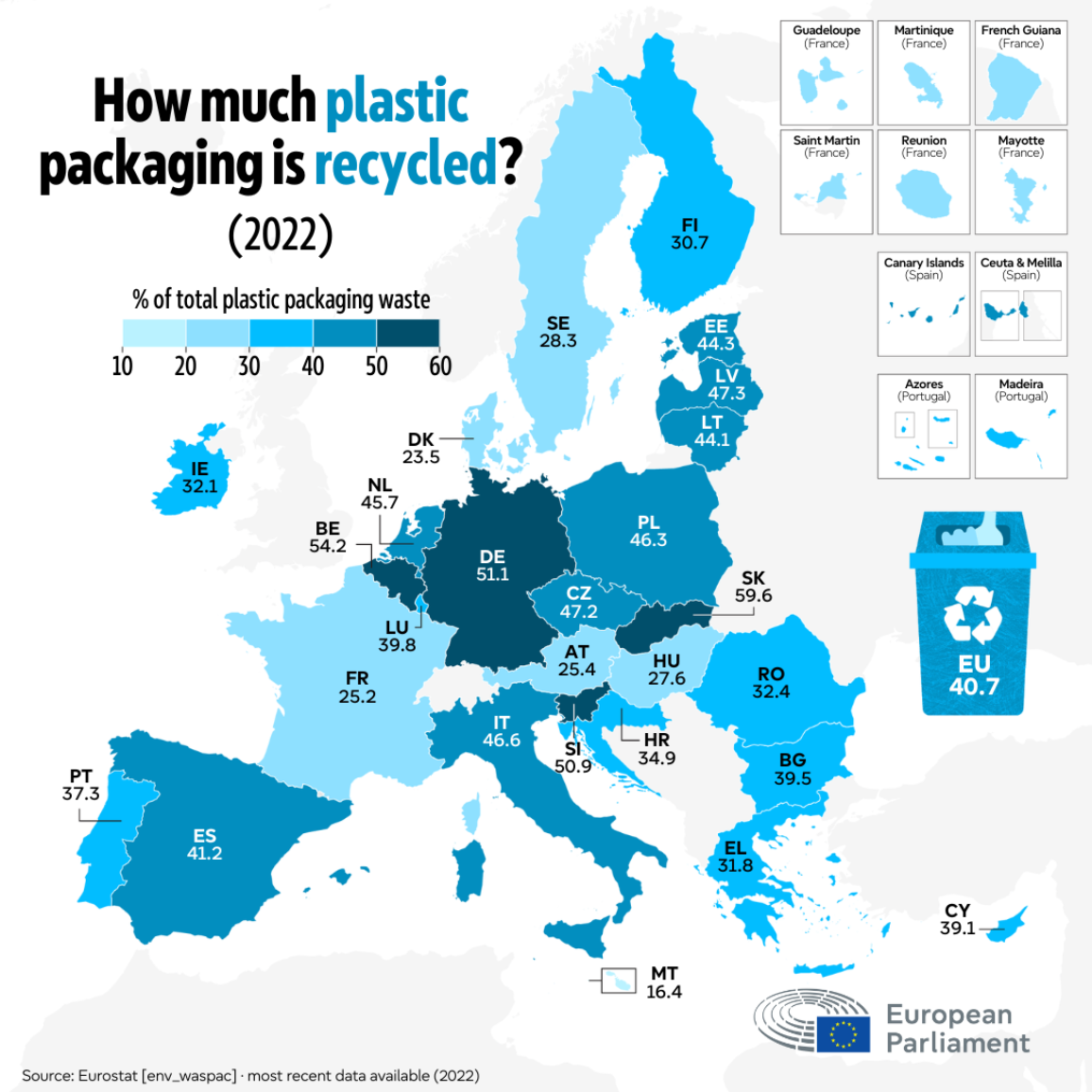
Overall recycling rates in the EU are actually declining, although there are differences between countries. Demographics plays a part, with younger generations less effectively separating waste types and doing a poorer job of recycling, surprisingly. Other factors also contribute to the trend, including the rise of fast fashion and online shopping (which must be packaged for delivery), underdeveloped collection and sorting infrastructure, and waste incineration in some member states.2
To address the challenge, the EU adopted a Packaging and Packaging Waste Regulation (PPWR) in early 2025 that will came into force in the summer of 2026. The PPWR aims to move the EU towards a more circular economy. The problem is multi-faceted, so the regulations are too, setting targets for overall recycling rates, collection rates for specific types, recycled content rates in beverage bottles, and mandating the establishment of deposit-return systems (DRS).
Aside from packaging, some of that waste and litter consists of beverage containers. To be sure, many countries already run DRS for beverage containers, which ensure a significant fraction of containers are returned for direct re-use (like glass wine bottles) or down-cycling, like aluminum beer and pop cans, together with some plastic containers. In the EU, about 85% of jurisdictions have fully-implemented DRS with collection rates of packaging included.
Such schemes don’t capture all containers, though.
One subset of beverage containers not usually captured by DRS are single-use plastic (SUP) beverage cups. In the EU, 152,037 tonnes of SUP beverage cups were sold in 2022, which amounts to about half a kilogram per person.3 These take-away cups for coffee, tea, chai, iced latte, and so on can be made from a variety of materials like pure plastic, expanded polystyrene, and plastic-lined paper. The environmental impact of SUP beverage cups can be significant. All require energy to make, decompose slowly or not at all, release toxins into the environment, and take up space in landfills.4
One innovative solution being piloted is the use of reverse-vending machines (RVMs).
Aarhus, Denmark’s second largest city (about 300,000 people), is an illustrative case study. Aarhus determined that disposable take-away packaging made up 45% of the city’s waste stream. Some of the more obvious part of the packaging is the ubiquitous take-away beverage cup. The city wanted to replace the disposable cups with re-usable ones. In order for re-usable cups to be a better environmental alternative, they would have to be re-used at least six times. The solution therefore would require not just technical changes but also a change in consumer behaviour.
The system Aarhus implemented centres around new re-usable cups and automated reverse-vending machines (made by a Norwegian company, TOMRA)5 to collect them, located in the open air throughout the city. Customers pay a deposit of €0.67 for the cup when they buy the beverage, and the money is returned to their credit card when they return the cup to one of the reverse-vending machines after they are done with the cup. The cups are collected from the machine, washed, inspected, and returned to cafes for re-use.
The three-year pilot scheme began in 2024 with a pilot involving 45 cafes who offered the new cups. Take-up was initially slow, with a return rate of just 25%. That changed after the widely-attended annual fall fair in the city, when the only option at fair retailers was the re usable cups. As of late 2025, the return rate was up to 88%, equivalent to re-using each cup 44 times.6
Other countries have piloted deposit-return systems using reverse vending machines.
Portugal piloted a scheme from 2020 to 2021 that used RVMs to collect high-value PET (polyethylene terephthalate) bottles for recycling rather than direct re-use. The pilot resulted in increased return rates, partially dependent on the value of the initial deposit. Sufficient access to machines and accurate information about the scheme was also important for success.7
The Slovak Republic implemented a DRS beginning in 2022, using reverse-vending machines made by TOMRA. The system accepts all plastic and metal beverage containers (except dairy, syrups, and spirits) between 0.1 and 3 litres. The machines scan the bar codes on the containers to confirm container type in order to authorize refund. As of the end of 2023, there were 3,269 collection points in the country, with about three quarters of them having RVMs. Overall, the return rate for the second year of the DRS stood at 92%.8
Reverse-vending machines are only part of the solution toward keeping plastics out of the environment by collecting them for re-use and recycling. The machine’s ability to change behaviour when integrated with a thought-out logistics chain likely means their use will spread.
Reading
- “Packaging Waste - Environment - European Commission.” https://environment.ec.europa.eu/topics/waste-and-recycling/packaging-waste_en Retrieved 17 May 2026
- Sidorczuk-Pietraszko et al., “Are Deposit–Return Schemes an Optimal Solution for Beverage Container Collection in the European Union?” https://www.mdpi.com/2071-1050/17/19/8791/pdf?version=1760007936
- “Ten EU Countries Exceeding SUPD Collection Targets - Environment.” https://environment.ec.europa.eu/news/ten-eu-countries-exceeding-supd-collection-targets-2026-04-16_en Retrieved 18 May 2026
- Nowell, “The Disposable Cup Crisis.” https://www.theguardian.com/environment/2024/jan/22/disposable-coffee-cups-environmental-impact
- “Reusable Takeaway Packaging for Urban Sustainability.” https://www.tomra.com/reusable-takeaway-packaging/solutions/citywide-reusable-packaging-system, Retrieved 24 May 2026
- Euronews, “How Did This European City Get People to Return Their Coffee Cups?” https://www.euronews.com/2025/01/11/people-are-paid-to-return-coffee-cups-in-this-danish-city-does-it-work Retrieved 24 May 2026
- Martinho et al., “Social Evaluation of a Deposit and Refund System Pilot Project for Polyethylene Terephthalate Packaging.” https://www.sciencedirect.com/science/article/pii/S266701002400060X
- 2023 Annual Report of the Správca zálohového systému. https://slovenskozalohuje.sk/wp-content/uploads/2024/11/Annual-report-2023.pdf