Contingent Power
In the future, the "always-on" electricity we get from our national grids might be more contingent on time and price availability of renewable sources.
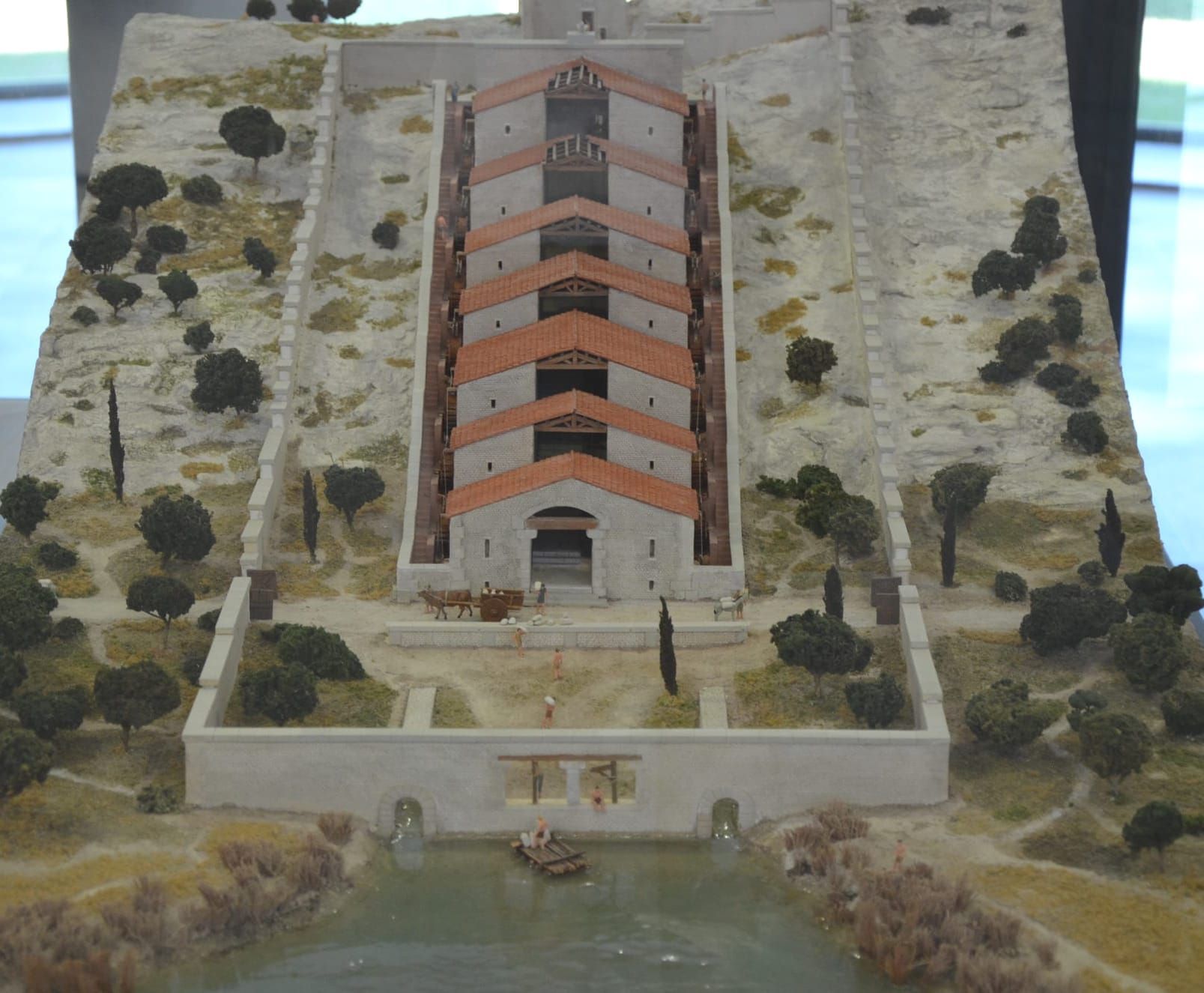
“Always-on” electrical power is a relatively recent phenomenon. Since before Roman times and well into the industrial revolution, some industrial work could only be done where the power source was located: windmills to pump water, windmills and water wheels to grind grain, water wheels to run textile mills, and steam engines to pump water and power textile mills (although the coal to generate steam came from distant mines). The work was contingent on power being available at the right time and place.
Not until the invention of electric motors and generators could power be distributed away from point of power generation.
A remarkable ten-year period (1879 - 1889) witnessed the invention of the key technologies that would create the demand for, and enable the construction of, electricity grids: namely the incandescent light bulb, the first commercial power stations (for lighting), the first electric street cars, the invention of three-phase alternating current, and the steam turbine.1
Grids were local and separated at first, but throughout the late 19th and into the 20th century, they standardized the technologies and expanded to cover entire countries. In the USA, for example, even rural farms were electrified by 1950. Most grids were powered by constantly spinning turbines, either from water behind hydro dams or steam fuelled by coal combustion. Oil, natural gas, and nuclear were added later.
While electrical grid utilities have always faced the challenge of matching supply with demand, demand growth in the past was relatively slow and broadly predictable, so that generation capacity could stay ahead of demand and be incorporated into the grids. A key aspect to matching supply and demand is connecting regional and national grids for mutual benefit. In North America, most Canadian electrical grids see peak demand related to heating in winter, whereas in the USA, most grids see peak demand related to cooling in summer. Tying the grids together allows excess off-season generating capacity to be sent to the other country.
These sources and grids have enabled 24/7 power availability. We’ve come to take for granted that electricity will always be there when we flip a switch, without needing to think about the source. We believe that to be normal and inevitable, but in future it may not be.
Why not?
Two recent developments — new distributed sources of supply and rapidly-proliferating high-demand loads — are changing the situation.
The supply side is changing because of the availability of more-efficient and affordable renewables ... mainly solar PV and wind. While these new, often distributed local sources offer opportunities to de-carbonize the grid, they are variable in availability and quantity, and can’t be adjusted to match changing demands for electricity. As a result, when renewable sources make up a large enough share of the supply, the grid can experience problems with voltage, frequency and power quality.2 In addition, traditional tariff structures and electricity-market dynamics are often impediments to large-scale integration.3
In essence, incorporation of these sources is often seen as a problem of how to make them behave like traditional spinning generation, which provides constant output and dispatchable availability. Our local electrical utility is a case in point. It recently changed its self-generation grid connection financials from net metering to net billing. This effectively discourages larger variable renewable energy grid connections and encourages more self-consumption of that power.4
The nature of electrical demands on the grid is also beginning to change. AI data centres exemplify this trend. Demand for them is relatively new and increasing quickly. The loads they impose are relatively large (20 - 100 megawatts on average with some much larger)5, making it difficult to supply them from existing grids in the time desired.
How are electrical grid utilities and their customers responding?
Responses fall into two broad categories: demand side and supply side. Both make power use more contingent on when renewable power is available, rather than attempting to make renewables meet inflexible demand.
Demand Side Response/Control
- Demand-side response is intended to change consumer behaviour. Generally it uses price signals to reduce peak demands by shifting the use of electricity to times when renewable power is more available or cheaper. Smart metering allows rates to vary with time of day, for example. If power is cheaper late at night, consumers may choose to run appliances or charge electric vehicles (EVs) then.6 On the other hand, Australia now has so much solar PV power available on sunny days that utilities will soon be offering free electricity for three hours in the middle of the day in an effort to shift domestic power use away from dark evenings when generation relies on fossil fuels.7
- Demand-side control is where the utility takes direct control of consumers’ equipment (with permission), such as heat pumps and EV charging, to better match use to the availability of renewable power.8
Supply Side Microgrids
Microgrids are aggregations of local distributed renewable electricity generation such as solar PV, wind, and biomass gasification, often coupled with battery storage, but usually tied into larger electricity grids. Microgrids usually operate autonomously to prioritize consumption of the energy produced within them, but can also supply power to reduce peak load in the larger grid. Autonomous operation also provides local supply during main grid outages.9
Microgrids not only require new technology to work, they also require organizational and regulatory changes to successfully operate and integrate into traditional grids. Most often microgrids are organized in renewable energy communities. The European Union addressed this some time ago when they issued a directive in 2018 that defined renewable energy communities, and cleared barriers to their formation and integration.10
Microgrids dedicated to AI data centres are also being built. They are attractive because they offer enhanced reliability, can usually be built faster, and can often be low-carbon if powered by renewables with battery storage.
We should note the strategies above are aimed at better matching demand for electricity with contingent supply, but they don’t necessarily reduce overall demand or use. Indeed, most sources we consulted cited the increasing overall demand for electricity as a main driver for better ways of dealing with the growing contingent power of renewables.11
As contingent renewable power provides an ever-larger share of the overall electricity supply, the electricity will likely still be there when you flip a switch, but the cost to make the flip without thinking about why and when you do so will likely rise.
Reading
- “Electricity Timeline - Energy Kids: U.S. Energy Information Administration (EIA),” accessed June 22, 2026, https://www.eia.gov/kids/history-of-energy/timelines/electricity.php.
- Chu Donatus Iweh et al., “Distributed Generation and Renewable Energy Integration into the Grid: Prerequisites, Push Factors, Practical Options, Issues and Merits,” Energies 14, no. 17 (2021): 5375, https://doi.org/10.3390/en14175375.
- Chu Donatus Iweh et al., “Distributed Generation and Renewable Energy Integration into the Grid: Prerequisites, Push Factors, Practical Options, Issues and Merits,” Energies 14, no. 17 (2021): 5375, https://doi.org/10.3390/en14175375.
- BC Hydro Net Metering Changes July 2026 - New 10c/kWh Export Rate | SolarWeb, Canadian Solar News, March 25, 2026, https://solarweb.ca/bc-hydro-net-metering-changes-self-generation-rate-2026/.
- SolarTech, “How Much Electricity Does a Data Center Use? Complete 2025 Analysis,” IAEI Magazine, January 1, 2026, https://iaeimagazine.org/electrical-fundamentals/how-much-electricity-does-a-data-center-use-complete-2025-analysis/.
- S. Lo Piano and S. T. Smith, “Energy Demand and Its Temporal Flexibility: Approaches, Criticalities and Ways Forward,” Renewable and Sustainable Energy Reviews 160 (May 2022): 112249, https://doi.org/10.1016/j.rser.2022.112249.
- Emiliano Bellini, “Free Midday Electricity Key to Drive Consumer Demand to Match Excess PV Generation,” Pv Magazine Australia, April 16, 2026, https://www.pv-magazine-australia.com/2026/04/16/free-midday-electricity-key-to-drive-consumer-demand-to-match-excess-pv-generation/.
- S. Lo Piano et al, “Energy Demand and Its Temporal Flexibility”, ibid.
- Arvind R. Singh et al., “Machine Learning-Based Energy Management and Power Forecasting in Grid-Connected Microgrids with Multiple Distributed Energy Sources,” Scientific Reports 14, no. 1 (2024): 19207, https://doi.org/10.1038/s41598-024-70336-3.
- Directive (EU) 2018/2001 of the European Parliament and of the Council of 11 December 2018 on the Promotion of the Use of Energy from Renewable Sources (Recast) (Text with EEA Relevance.), CONSIL, EP, 328 OJ L (2018), http://data.europa.eu/eli/dir/2018/2001/oj.
- “Microgrids Solve Major Demand at AI Data Centers | Infosys Knowledge Institute,” accessed June 30, 2026, https://www.infosys.com/iki/perspectives/microgrids-ai-data-centers.html.